In recent years, advancements in automotive technology have significantly enhanced the safety features in vehicles, both externally and internally. Among these innovations, smart in-cabin cameras and sensors have emerged as invaluable tools in promoting driver safety. These features, seamlessly integrated into the vehicle’s interior, work to monitor and respond to a driver’s behavior, particularly focusing on detecting early signs of fatigue and distraction.
Traditionally, driver monitoring systems relied on external cues such as lane departure warning systems or adaptive cruise control to manage and predict driver alertness. However, recent innovations have led to the development of more personalized monitoring techniques. Subtle, under-display interior cameras, often barely noticeable to the untrained eye, now play a crucial role in keeping drivers safe. These advanced cameras are designed to track eye movement and blink frequency—parameters that can reveal much about a driver’s attentiveness and level of fatigue.
Eye movement and blink frequency are among the most reliable indicators of a driver’s state of alertness. While driving, a person's eyes are typically in constant motion as they scan the road, mirrors, and various instruments. However, as fatigue sets in, these movements tend to slow down. A fatigued driver may exhibit longer periods of eye closure, reduced focus shifts, or inconsistent blinking patterns, all of which can be dangerous when behind the wheel.
Subtle interior cameras work by using sophisticated algorithms to interpret visual data. They capture the driver’s eye movements in real-time and compare them to established patterns of normal, attentive driving behavior. By analyzing these patterns, the system can determine whether the driver is becoming less responsive, signifying potential fatigue or distraction.
When these cameras detect signs of decreasing alertness, the system is designed to intervene in a gentle yet effective manner. Rather than a harsh alarm that could startle the driver, the car issues subtle reminders to suggest that the driver take a break. This could come in the form of a visual notification on the dashboard, a gentle vibration in the steering wheel, or a soft audio alert reminding the driver to consider pulling over at the next safe opportunity. These cues are thoughtfully engineered to promote safety without causing undue alarm or stress.
In addition to monitoring eye movement and blinking, some advanced systems may also track head position and posture. These parameters offer additional data points to assess the driver’s level of engagement. For example, if a driver’s head begins to nod frequently or their posture indicates drowsiness, the system may issue a reminder to the driver even if their eye patterns alone are not indicating extreme fatigue.
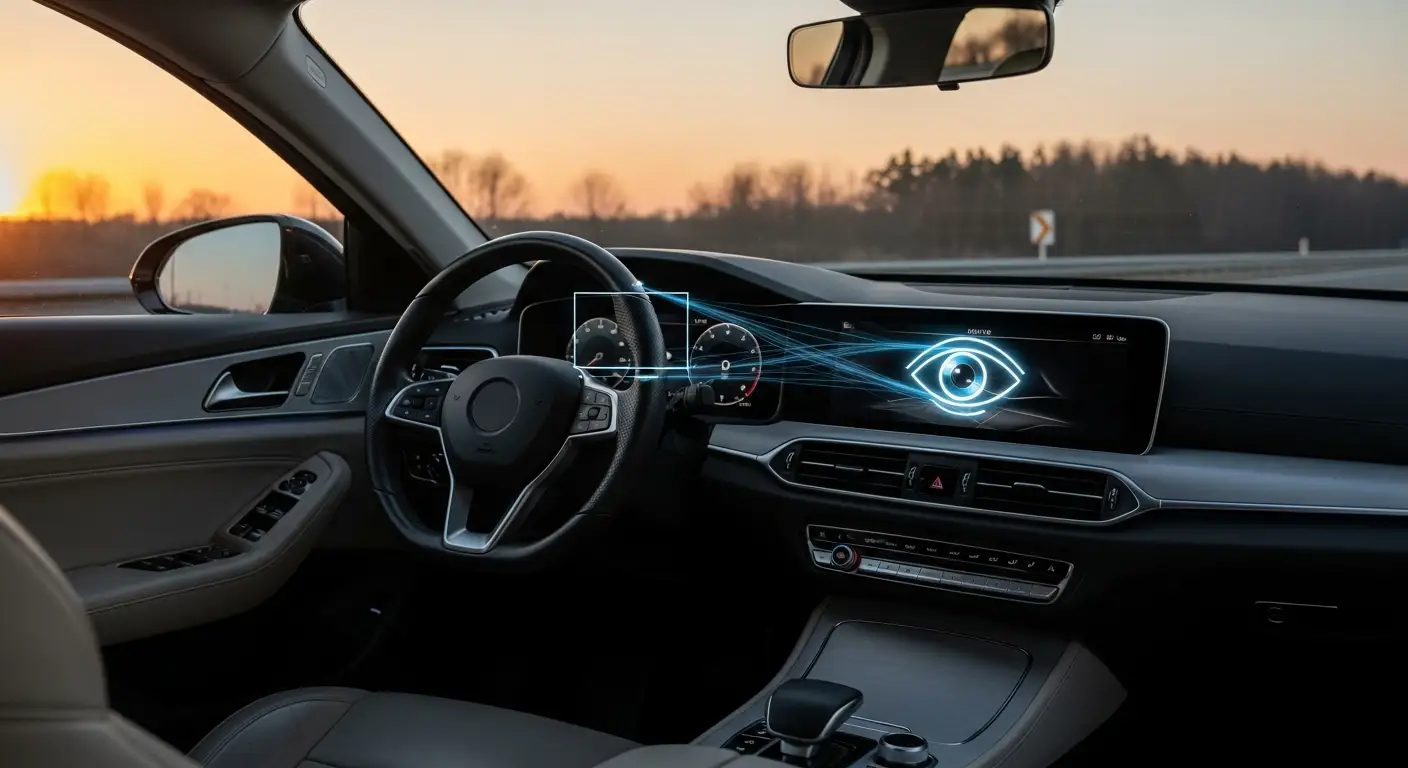
The integration of such in-cabin technologies represents a shift towards a more proactive approach in promoting road safety. Unlike traditional methods that mainly react to a detected loss of vehicle control, such as lane departure, these systems aim to prevent incidents by addressing potential problems before they develop into critical situations. This proactive approach not only keeps the driver safer but also protects other road users, creating a safer environment for all.
Furthermore, these technologies are constantly evolving, with manufacturers striving to make them more accurate and less intrusive. Improvements in artificial intelligence and machine learning are continually enhancing the systems’ ability to differentiate between normal driver behavior variations and actual signs of fatigue or distraction. This ensures that drivers are not overwhelmed with unnecessary alerts, maintaining a balance between attentive monitoring and driver autonomy.
It is also important to note that while these technologies significantly contribute to road safety, they are not a substitute for responsible driving behavior. Drivers should always prioritize their own alertness by ensuring adequate rest before long drives and taking breaks as needed. Technology is a support system, not a replacement for human judgment and responsibility.
In-cabin cameras and sensors also carry the potential for future advancements and expanded capabilities. For instance, as biometrics technology develops, the integration of heart rate monitoring or other physiological signs could provide an even more comprehensive assessment of driver well-being. Such advancements promise a future where vehicles are not just modes of transportation but active partners in ensuring the safety and health of their occupants.
In conclusion, the introduction of smart in-cabin cameras and sensors is an exciting development in the automotive industry, with a primary focus on promoting safety through non-intrusive monitoring of driver behavior. By using advanced technology to detect early signs of fatigue and distraction, these systems offer gentle reminders to help drivers stay alert and make safer driving decisions. As technology continues to evolve, these systems are likely to become even more sophisticated, further enhancing their role in creating safer roads for everyone.