As the electric vehicle (EV) market continues to grow and evolve, the infrastructure that supports it becomes increasingly essential. A critical part of this infrastructure is the network of charging stations that allow EVs to recharge their batteries. Understanding the different levels of EV charging—commonly referred to as Level 1, Level 2, and Level 3 charging—is important for both current and prospective EV drivers. These levels determine the speed and convenience of charging, and selecting the right type for your needs is key to optimizing your EV experience.
Level 1 charging refers to the most basic form of EV charging. It involves plugging the vehicle into a standard household electrical outlet using a portable charging cable. Level 1 chargers typically provide about 120 volts of alternating current (AC). While this method is the slowest when it comes to charging an EV, it is also the easiest and most accessible, as nearly any home or building with an electrical outlet can support it.
In practical terms, Level 1 charging generally adds around 3 to 5 miles of range per hour of charging. This makes it best suited for overnight charging scenarios where the vehicle is parked for an extended period, such as in a garage at home. For drivers with short daily commutes or for those who drive infrequently, Level 1 charging may be sufficient. It's also a viable option for those who have access to workplace charging but live quite close to their place of employment.
However, because Level 1 charging is relatively slow, it is not ideal for drivers who cover long distances daily or have high-mileage needs. The limited charging speed may not replenish sufficient range in a short amount of time, potentially leaving the vehicle undercharged. Still, having Level 1 as a backup charging option is beneficial as it increases the flexibility of charging locations.
Level 2 charging is a step up from Level 1 and is the most common type found in public and private charging stations. These chargers deliver electricity at higher voltage levels, typically between 208–240 volts AC. This increase in voltage results in significantly faster charging times compared to Level 1. Depending on factors like the EV's battery capacity and the specific charger, Level 2 can add 10 to 60 miles of range per hour of charging.
Installation of a Level 2 charger often requires professional assistance, as it needs a dedicated 240-volt outlet, similar to those used for large appliances like dryers. As such, many EV owners choose to install Level 2 chargers in their homes, particularly if they have longer commutes or drive their vehicles frequently. These chargers can recharge an EV overnight, allowing for a full battery each morning.
Public Level 2 chargers are common in places like shopping centers, workplace parking lots, and other locations where vehicles are likely to be parked for a few hours. They provide the convenience of faster charging while occupants are busy with other activities and serve as an enticing incentive for potential customers and employees to patronize certain businesses.
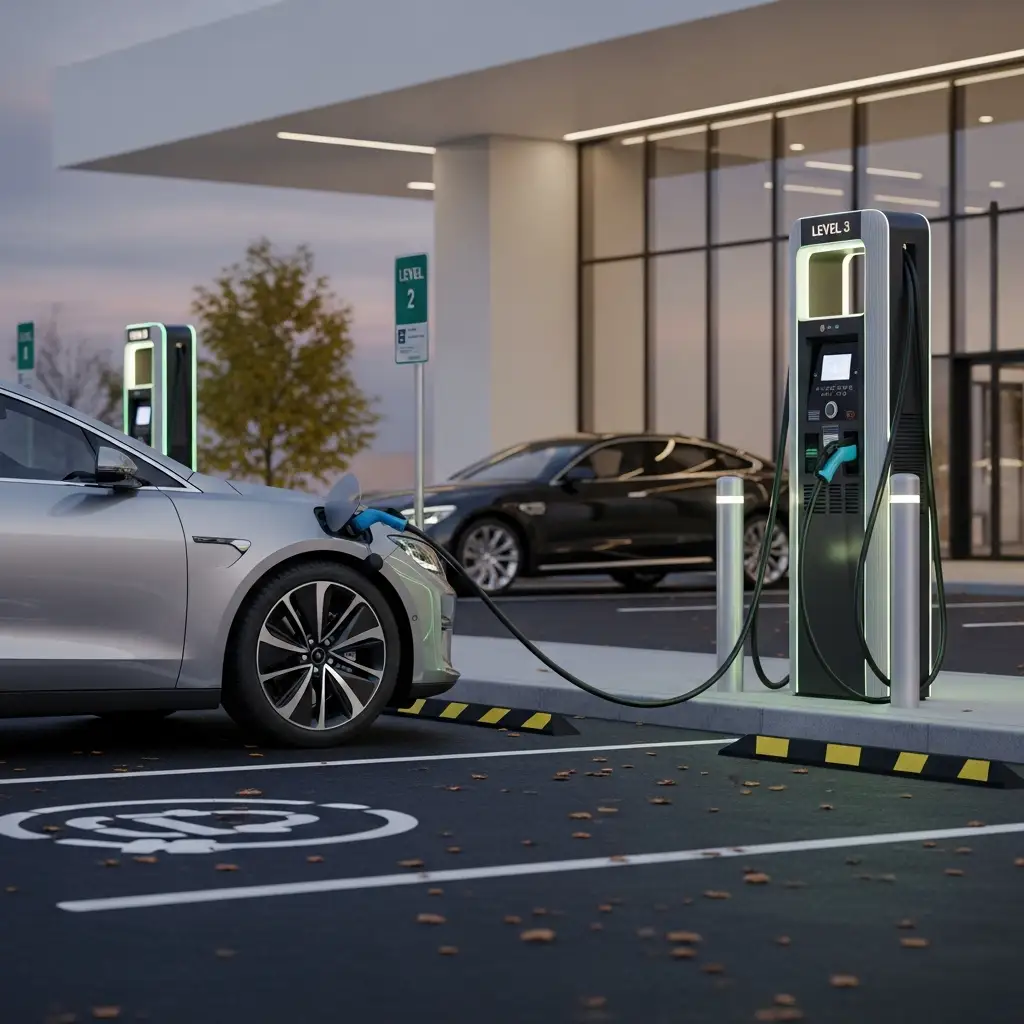
Other variations of Level 2 chargers include systems with smart charging capabilities, allowing for features like scheduling, energy usage tracking, and remote operation through smartphone apps. These features can optimize charging times to take advantage of off-peak electricity rates, further reducing the cost of EV ownership.
Level 3 charging, often referred to as DC fast charging, is the fastest method available for replenishing an EV's battery. Unlike Levels 1 and 2, which use AC electricity, Level 3 chargers provide direct current (DC), which is delivered at much higher power levels. This method can charge an EV significantly faster, typically providing 60 to 100 miles of range in just 20 to 30 minutes, depending on the vehicle and charger specification.
Level 3 chargers are predominantly found in public spaces, particularly along highways and major traffic corridors where drivers may need to quickly recharge on longer road trips. The convenience of rapid charging makes these stations most valuable for reducing downtime on long journeys, allowing drivers to get back on the road efficiently.
However, the high cost and power requirements of Level 3 charging stations make them less common in residential areas. They require specialized, high-capacity electrical infrastructure, which is typically only feasible for commercial installations. Furthermore, not all EV models are compatible with all Level 3 charging stations, so drivers need to verify compatibility before use.
The vast majority of EV drivers will use a combination of these chargers, depending on their specific use case. Level 1 remains suitable for those with very modest driving requirements, while Level 2 provides a balanced solution for home charging and is convenient for many daily users. Level 3 is an excellent supplement, best utilized during travel or when returning the battery to full capacity in short order is necessary.
The decision of which level of charging to rely on will depend on various factors, including travel distances, frequency of trips, available time to charge, and budget for charging equipment. As technology continues to improve and expand, the number of charging stations at all levels will likely increase, making EV ownership more accessible and convenient for a wider range of drivers.
Understanding these differences in charging levels is crucial to owning and operating an electric vehicle efficiently. By being informed about how each level functions and what it entails, EV drivers can make strategic choices about how and where to recharge their vehicles. This not only enhances the EV experience but also maximizes the benefits of transitioning to an electric mode of transportation.