Crash test ratings are an essential aspect of automotive safety, serving as a vital reference for consumers, manufacturers, and regulators alike. These ratings provide insights into a vehicle’s performance in simulated crash scenarios, informing potential buyers about the safety features and structural integrity of different car models. In this article, we'll explore the intricacies of crash test ratings, with a particular focus on understanding what a five-star rating truly signifies for passenger safety.
Crash tests are conducted by various organizations around the world, with the most notable being the National Highway Traffic Safety Administration (NHTSA) in the United States and the European New Car Assessment Programme (Euro NCAP) in Europe. Both these bodies have established rigorous testing procedures to evaluate the safety of vehicles. Typically, crash tests simulate different types of collisions, such as frontal impacts, side impacts, and rollover accidents, to assess how well a vehicle can protect its occupants.
The NHTSA uses the New Car Assessment Program (NCAP), which implements a five-star rating system to evaluate vehicle safety. This system allows consumers to easily compare how well vehicles perform in crash scenarios, with more stars indicating better protection. The NHTSA's crash testing includes frontal crash tests, side crash tests, and rollover resistance tests. Each of these tests is designed to replicate real-world accident conditions and assess the vehicle's ability to protect the driver and passengers.
Frontal crash tests involve a head-on collision with a fixed barrier at a specific speed, typically 35 miles per hour (approximately 56 kilometers per hour) in the NHTSA tests. During this test, the vehicle's front end impacts a rigid wall, allowing testers to analyze the car's structure and restraint systems like seatbelts and airbags. The dummies inside the vehicle help to measure the potential injuries a human occupant might sustain during such a collision.
Side impact tests, on the other hand, evaluate the vehicle's ability to withstand forces from a perpendicular impact. In the NHTSA testing process, a moving barrier strikes the side of the stationary vehicle to simulate a 'T-bone' collision at intersections. This test is crucial because side impacts are among the most severe types of crashes, given the relatively limited distance between the side of a car and its occupants.
Another component of the NCAP rating is the rollover resistance evaluation, which predicts the likelihood of a vehicle rolling over in the event of an abrupt maneuver. Rollover accidents pose a significant risk, particularly for taller vehicles like SUVs, making this test an important part of the overall safety assessment.
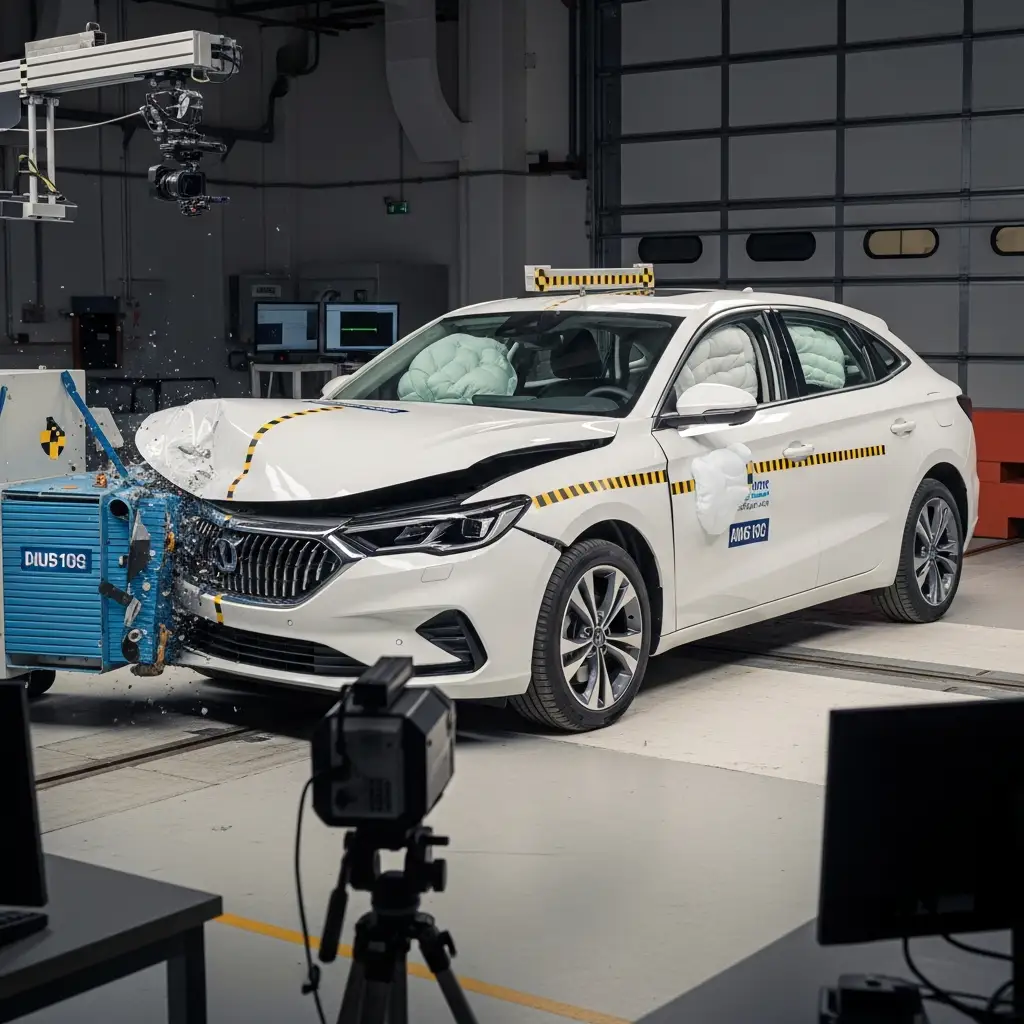
In Europe, the Euro NCAP provides comprehensive safety evaluations through its own star rating system. It uses a combination of different tests, including adult occupant protection, child occupant protection, vulnerable road user protection (such as pedestrians), and safety assist technologies. Euro NCAP's holistic approach aims to provide a snapshot of a car's safety performance across various criteria, offering a broader understanding of safety beyond just the crash test results.
The five-star rating system, though simple in appearance, is built upon a series of meticulous tests and statistical analyses. Achieving a five-star rating means a vehicle has demonstrated superior crashworthiness and is equipped with effective safety features such as advanced airbag systems, crumple zones, seatbelt pretensioners, and potentially, active safety features like electronic stability control and emergency braking systems.
However, it's crucial to keep in mind that while five stars indicate excellent performance in testing conditions, real-world safety can be influenced by numerous other factors. Variables such as road conditions, driver behavior, vehicle maintenance, and even weather can affect safety outcomes. Additionally, technological advancements mean safety standards and test protocols are continually evolving, leading to ongoing improvements in vehicle safety features.
Understanding crash test ratings is vital for making informed decisions about vehicle safety. Consumers should consider the results of these tests, along with other factors, when choosing a vehicle. While a five-star rating suggests a high level of protection, it's equally important to consider other aspects such as the car’s handling characteristics, reliability, and the availability of active and passive safety systems.
Moreover, it’s wise to investigate crash test ratings from multiple organizations and assess the methodologies they use. This comprehensive approach can provide a well-rounded perspective on a vehicle’s safety profile. Accessing resources like detailed test reports and third-party safety reviews can further aid consumers in evaluating which vehicle might best suit their safety needs and preferences.
In conclusion, crash test ratings play a crucial role in educating consumers about automotive safety. The five-star rating is an indicator of a vehicle's robust safety performance under specific testing conditions, but users must remember to analyze this information in conjunction with other safety considerations. By understanding the nuances of crash test ratings, individuals can make better-informed decisions, potentially leading to the selection of safer vehicles that align with their personal and family safety priorities.