Understanding why tire pressure warning lights tend to illuminate more frequently during a summer heatwave can save you from potential mishaps on the road. While it may seem like the car is playing tricks, these warnings are crucial reminders to ensure your vehicle remains in top condition even during the hottest months. This article dives into the science behind tire pressure changes during heatwaves and offers tips on maintaining optimal tire health.
Let's begin with a brief overview of tire pressure dynamics. Your tires are filled with air, which expands and contracts with temperature fluctuations—a concept derived from the Ideal Gas Law in physics. In the context of a hot summer day, the air molecules inside your tire gain energy and speed up, causing them to push harder against the inside walls of the tire. This results in increased tire pressure.
Now, imagine driving on a sizzling road surface under a blazing sun. The tire, made of rubber, absorbs a significant amount of heat from both the air and the contact with the heated ground. The heat causes the air inside to expand even more, sometimes triggering your vehicle's Tire Pressure Monitoring System (TPMS) to light up. This warning is critical; it ensures you're aware of potential over-inflation, which could lead to an uncomfortable drive or, in worst cases, a dangerous tire blowout.
To tackle these heat-induced issues, it's vital to regularly monitor your tire pressure. However, measuring the pressure when your tires are hot—like right after a drive or while sitting under the sun for hours—might give you an inaccurate reading. It's akin to taking your body temperature after a vigorous workout; the numbers will be misleadingly high.
The best practice is to check tire pressure when the tires are cold—typically in the morning or after your car has been stationary for a few hours in a shaded or covered spot. This gives a more precise reading of the tire's baseline pressure. Most automobile manufacturers specify the recommended tire pressure based on a 'cold' reading, which you can usually find in the car’s manual or on a sticker inside the driver’s side door frame.
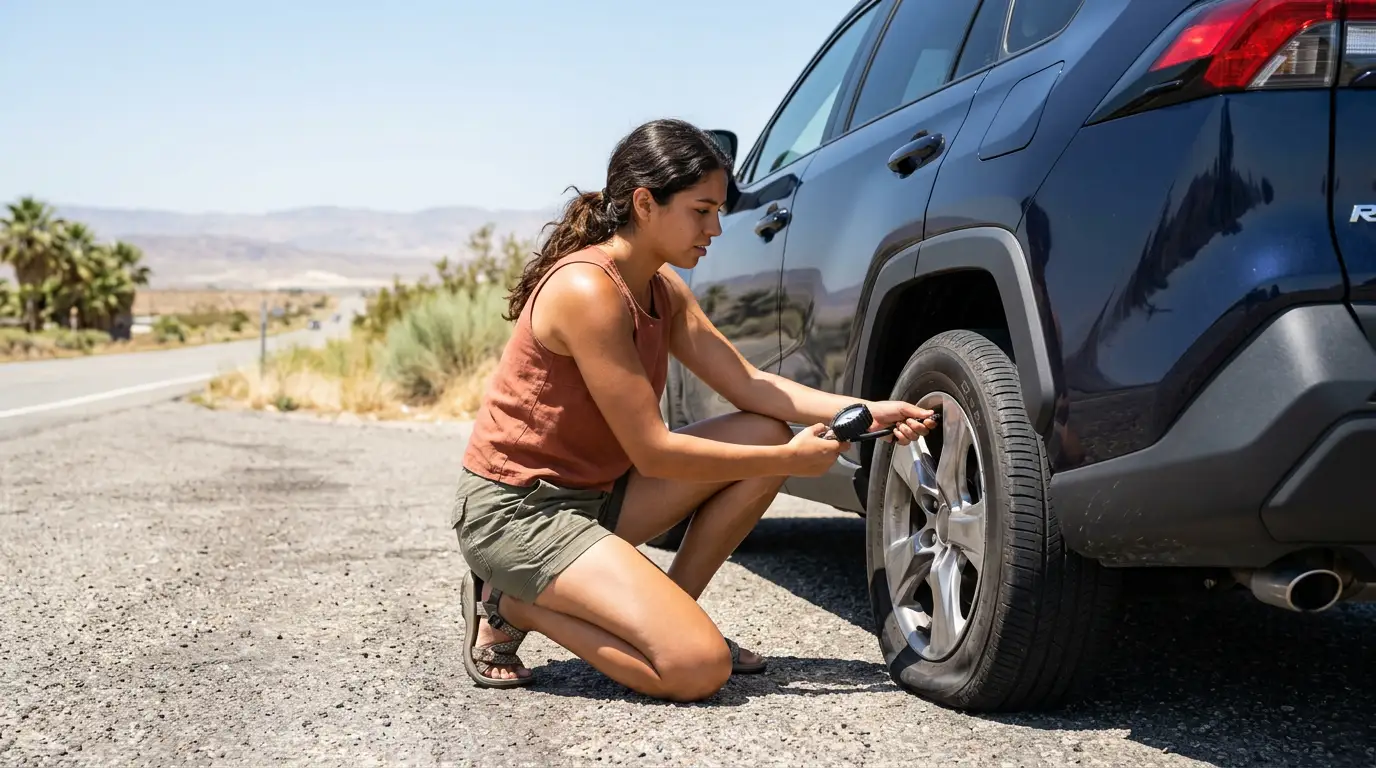
To safely measure the tire pressure, you'll need a reliable tire gauge. Digital or manual, either works well as long as it is calibrated correctly. Remove the valve cap from the tire, press the gauge onto the valve stem, and note the reading. Compare it against your vehicle's recommended pressure. If it's higher, consider allowing some air to escape. If it's lower, inflate the tire until it matches the recommendation—but remember to do this when the tires are still 'cold.'
Ignoring these steps could lead to two major issues: over-inflation and under-inflation. Over-inflating tires can diminish traction since a tire that’s too hard does not conform to the road surface as well, which can be particularly dangerous while driving at high speeds on a hot day. On the other hand, under-inflation can cause additional friction, leading to overheating and the risk of a blowout.
Besides manually checking your tires, become familiar with your car's TPMS settings if equipped. Some modern vehicles allow drivers to see individual tire pressures right on their dashboard displays. This feature can be a valuable real-time aid during long trips or extreme weather conditions. However, don't rely solely on the TPMS. Regular manual checks remain essential since the TPMS might have its own calibration issues or delays.
Heatwaves also bring additional stress to all parts of your vehicle, not just the tires. Ensure your car’s cooling system is in good condition, check the fluid levels, and watch for any unusual sounds or vibrations when driving. A well-maintained vehicle is far less likely to let you down during a summer heatwave.
In conclusion, understanding why tire pressure changes with the weather and how to measure it correctly when the tires are cold can help maintain a safe driving experience. Be proactive in monitoring your tire conditions, stay informed about your vehicle's functionalities, and take preventive measures. Doing so will ensure your car remains a reliable companion, even during the hot summer months. Keep cool and drive with confidence!