In today's rapidly evolving urban landscape, the concept of car ownership is undergoing a significant transformation. As city dwellers grapple with the decision between owning a personal vehicle or relying on on-demand travel options, understanding the intricate financial implications has become paramount. This guide offers a comprehensive breakdown of the true financial costs associated with both car ownership and on-demand travel, giving readers the tools to make informed decisions in the context of modern urban mobility.
At the core of evaluating the cost of car ownership is the Total Cost of Ownership (TCO), a metric that extends beyond the sticker price of a vehicle. Traditional TCO considerations include purchase price, fuel, maintenance, insurance, and depreciation. However, recent advancements in automotive technology introduce new layers to this equation. One such factor is the emergence of high-tech insurance premium shifts. The integration of semi-autonomous features and connected car capabilities often leads to increased insurance costs due to the complexity and cost of replacing advanced parts.
Moreover, the necessity for sensor calibration in modern vehicles, equipped with features like automatic emergency braking and lane-keeping assist, adds a previously non-existent maintenance overhead. These systems require regular checks and recalibrations, which can be costly and time-consuming, contributing significantly to the annual maintenance budget of vehicle ownership. Additionally, the depreciation of vehicles, particularly those loaded with high-tech features, is more rapid. As newer models boast more advanced technology, the resell value of previous models diminishes quickly, accelerating depreciation and impacting the overall cost equation.
Contrasting car ownership, on-demand travel offers a different cost structure. Peer-to-peer rental networks, micro-mobility setups, and ride-hailing services present fixed overhead that eliminates numerous variable expenses associated with owning a personal vehicle. These services bundle the costs of maintenance, insurance, and depreciation into a single fee, simplifying budget management for users. Though seemingly more expensive per trip, the ability to pay only for what is needed provides flexibility in financial planning, particularly in urban settings where daily car use may not be necessary.
Peer-to-peer rental networks offer the flexibility of short-term vehicle access without the commitment or responsibilities of ownership. Through these platforms, users can rent vehicles directly from individual owners, bypassing traditional rental companies' overheads. By eliminating long-term financial commitments, these networks often appeal to urban professionals whose vehicle needs are sporadic rather than continuous.
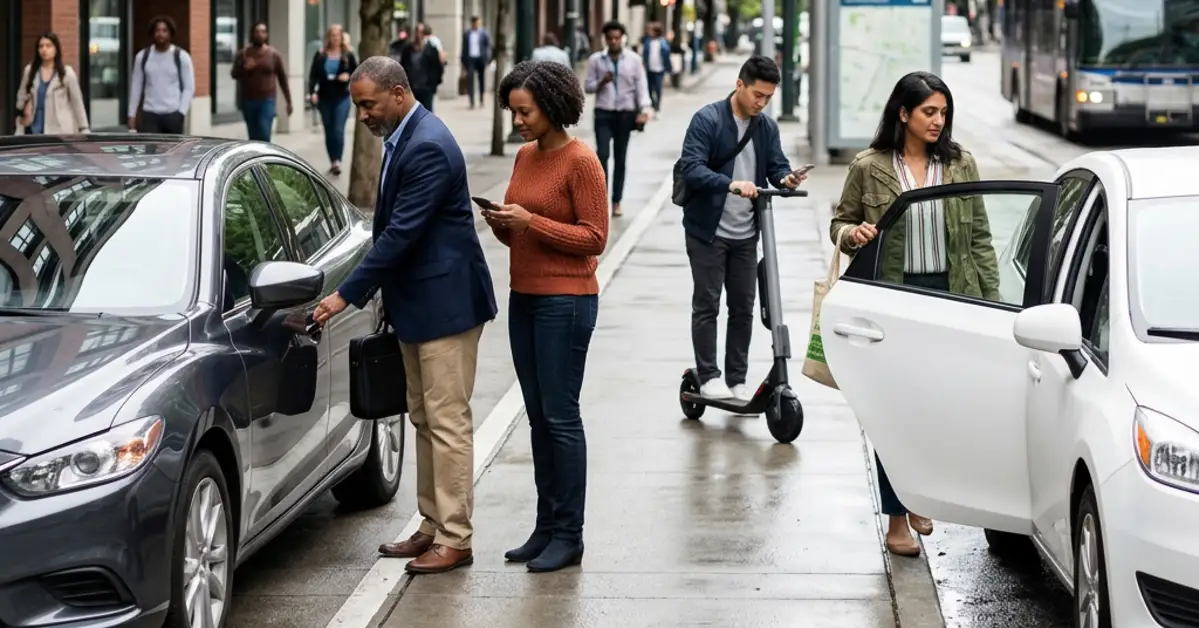
Micro-mobility setups provide a diverse array of transportation options that cater to the last-mile connectivity dilemma. E-scooters and bike-sharing programs offer eco-friendly and cost-effective alternatives for short distances. The fixed cost per ride can significantly reduce transportation expenses when used strategically for short commutes or quick errands, minimizing the need for more expensive options like ride-hailing or renting a car for short trips.
Ride-hailing services, on the other hand, present a flexible and convenient mode of transportation. The dynamic pricing, however, means the cost can vary based on demand and time of day, which can be a wildcard in budgeting. Nevertheless, for those without daily car usage needs, ride-hailing can be a cost-effective choice by negating maintenance and insurance expenses inherent to car ownership, especially when leveraged during non-peak hours or combined with other forms of transit.
Determining the transportation tipping point for urban professionals involves a personalized analysis of lifestyle, usage patterns, and financial priorities. For instance, individuals who frequently drive long distances may find the ongoing investment in car ownership justifiable. Conversely, those residing in dense urban areas with robust public transit infrastructure may discover an economically favorable path in combining micro-mobility and ride-hailing services for occasional longer trips.
In conclusion, the modern transit equation necessitates a multifaceted approach to financial planning around transportation. As technology continues to evolve, both the costs associated with vehicle ownership and the alternatives provided by on-demand travel will continue to shift. By understanding the intricate components of the TCO and the dynamics of on-demand travel services, urban professionals can devise a transportation strategy that aligns with their economic goals and lifestyle requirements. This strategic alignment is crucial in navigating the complex ecosystem of modern urban mobility effectively.