When it comes to saving money, choosing the right type of account can make a significant difference in how quickly your savings grow. High-yield savings accounts and standard savings accounts are popular options for individuals looking to grow their savings with minimal risk. Understanding the differences between these accounts can help you make an informed decision to maximize your savings potential.
High-yield savings accounts are similar to standard savings accounts in many ways. They are both low-risk options offered by banks or credit unions that pay you interest for keeping your money with them. However, the key difference lies in the interest rate offered by high-yield savings accounts, which, as their name implies, is typically much higher than that of standard savings accounts.
The difference in interest rates is often due to the way high-yield savings accounts are structured. These accounts are usually offered by online banks or financial institutions with minimal physical branch networks. By saving on overhead costs, such as rent, utilities, and staffing at multiple branch locations, online institutions can pass these savings on to their customers in the form of higher interest rates. This is why you will often see a more attractive annual percentage yield (APY) associated with high-yield savings accounts.
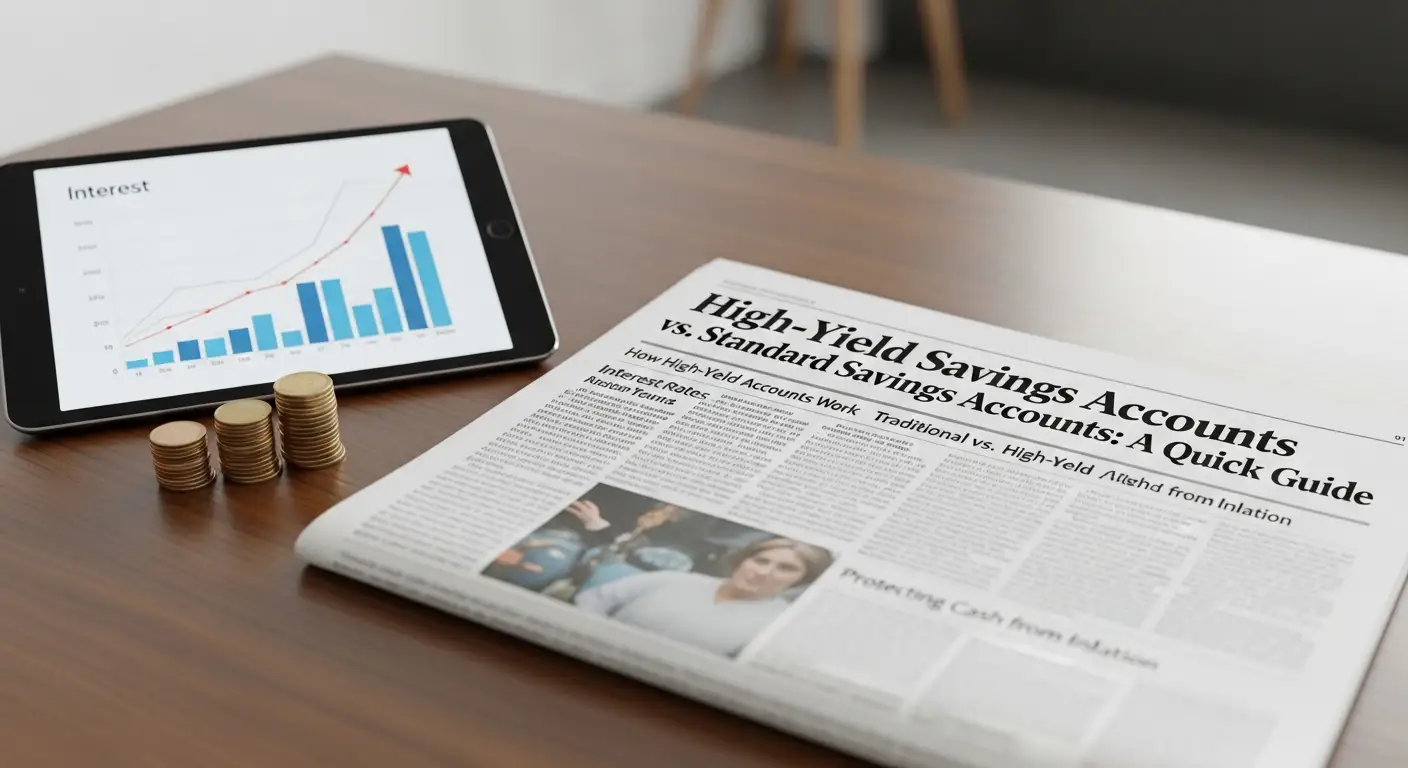
For everyday savers, high-yield savings accounts can be a great tool to protect cash from inflation. Inflation erodes the purchasing power of money over time, meaning that each dollar saved today buys less in the future. A high-yield savings account can help counteract this effect by allowing your money to grow at a rate closer to or exceeding inflation, thus preserving or increasing its real value.
Using a high-yield savings account is straightforward and does not typically involve hidden risks. When choosing an account, it's important to ensure that the bank or credit union offering it is federally insured by the FDIC (Federal Deposit Insurance Corporation) or NCUA (National Credit Union Administration). This insurance means that even if the financial institution fails, your deposits are protected up to $250,000 per account holder, per institution. As long as you stay within the insured limits, your savings are secure.
One aspect to consider when opting for a high-yield savings account is accessibility. Because these accounts are often with online banks without physical branches, you will primarily manage your funds through online platforms or mobile apps. While some may view this as an inconvenience, others prefer the ease of digital banking and the ability to manage their savings from anywhere.
It's important to note that while high-yield savings accounts offer attractive interest rates, they are not designed for frequent transactions. There might be limitations on how many withdrawals you can make per month, often in accordance with federal Regulation D. Additionally, while the interest rates are generally higher than standard savings accounts, they can vary depending on the bank and prevailing economic conditions. It's advisable to compare rates and features from multiple providers before making a decision.
Standard savings accounts, on the other hand, are typically offered by traditional banks with physical locations and a broader range of financial services. They often come with lower interest rates compared to high-yield accounts. The convenience of branch access might be a priority for some savers, especially those who prefer in-person banking or require services that can’t be easily managed online.
Despite their lower yields, standard savings accounts can still serve an important purpose. They are a safe place to keep funds you might need to access quickly or frequently. Some individuals prefer opening both a standard and a high-yield savings account to benefit from the accessibility of a traditional bank for everyday needs, while taking advantage of the higher returns for longer-term savings goals through a high-yield account.
In conclusion, the choice between a high-yield savings account and a standard savings account depends on your personal financial goals and preferences. High-yield accounts are ideal for those looking to maximize the growth of their savings while minimizing risk, and who are comfortable with online banking. Standard savings accounts may be more suitable for those who value the convenience of physical bank locations and services. By understanding the differences and aligning your choice with your financial strategy, you can make the most of your savings and protect your money from inflation over time.