Quantum computing represents one of the most exciting frontiers in modern science and technology, fascinating educators, researchers, and technology enthusiasts alike. Many people are curious to understand what quantum computing is, why it's different from classical computing, and how it might impact the future of technology. This guide aims to introduce these topics in an accessible manner for beginners who are new to the world of quantum computing.
At its core, quantum computing is a field that applies the principles of quantum mechanics, a fundamental theory in physics, to process information. The fundamental unit of quantum information is called the "quantum bit" or "qubit." Unlike classical bits, which exist in a state of either 0 or 1, qubits can exist in a superposition of states. This means that a qubit can be represented as 0, 1, or both, simultaneously. This property is one of the key differences that gives quantum computers their unique computational power.
Using qubits, quantum computers can perform complex calculations at speeds that are currently unattainable by classical computers. However, this doesn't mean that they will replace classical computers. Instead, quantum computers are anticipated to complement classical ones by handling specific types of problems that are challenging for traditional systems. These problems typically involve processing massive amounts of data at once or resolving complex mathematical issues more efficiently.
One central concept in quantum computing is entanglement, a phenomenon where two or more qubits become interconnected, meaning the state of one qubit immediately influences the state of another, no matter the distance between them. Entanglement allows quantum computers to perform multiple calculations at once, which potentially lets them solve complex problems much faster than classical computers. This aspect of entanglement relates to the level of parallelism that quantum computers can achieve, differing significantly from classic computers, which handle data sequentially.
It’s important to note, however, that quantum computers are not yet fully realized. Many of the celebrated and potential abilities of quantum computing are still, to some extent, theoretical. Current quantum computers, also known as Noisy Intermediate-Scale Quantum (NISQ) machines, are not perfect and face challenges such as error rates and coherence times. Coherence refers to the time period over which a qubit effectively maintains its quantum state. Noise in the system, which introduces errors, is one of the hurdles researchers are actively trying to overcome through error-correction codes and improved qubit technologies.
A common misconception is that quantum computing will automatically lead to breakthroughs overnight. The reality is that as of now, quantum computers are best at solving specific problems for which they are uniquely suited, such as optimizing complex systems, simulating quantum physics, and cryptography. Most experts agree that it will take time before quantum computing becomes commercially viable or fully replaces certain classical computing applications.
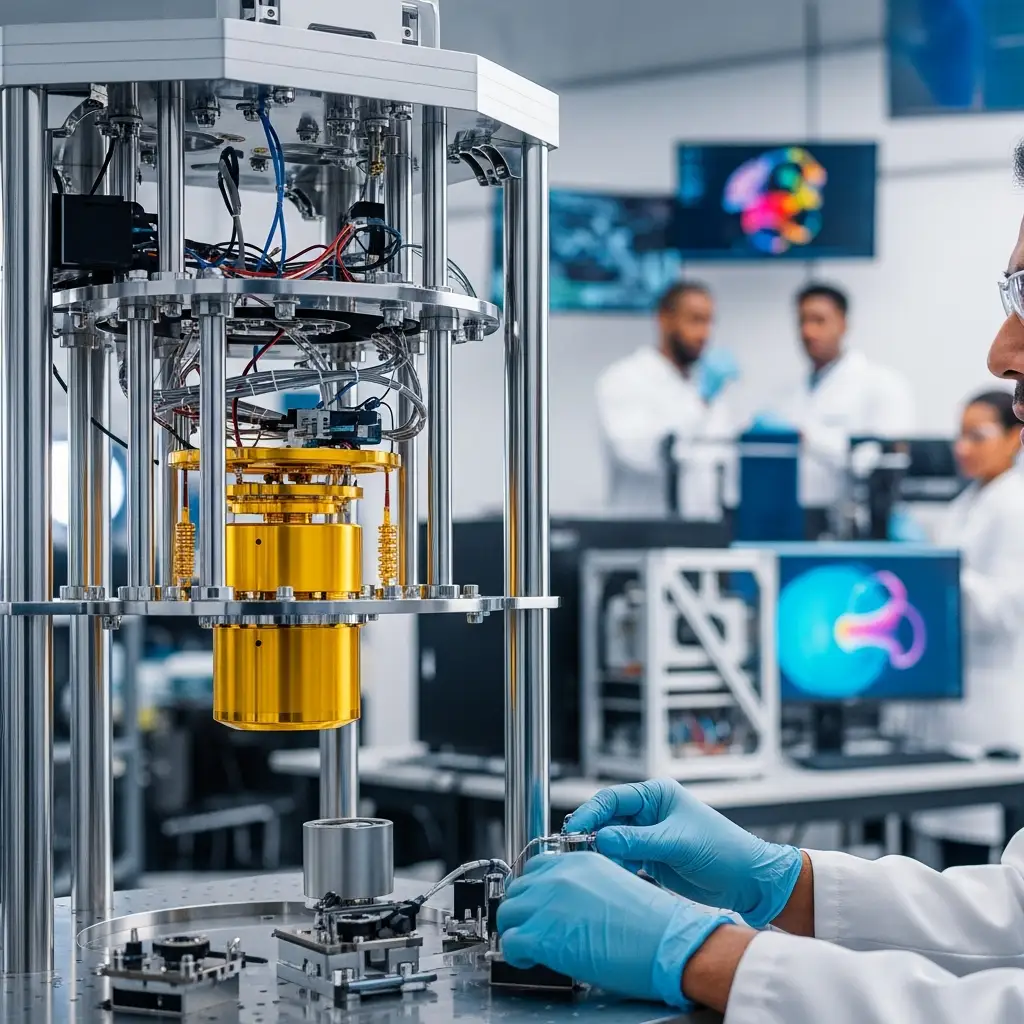
Quantum supremacy, another topic frequently discussed, refers to the point at which a quantum computer could perform some operation faster than the fastest classical computer on earth. In recent years, some research groups have claimed to have achieved this milestone for specific operations, sparking both excitement and skepticism. These claims are often based on carefully designed problems that play to the strengths of quantum systems and are not necessarily indicative of quantum superiority in practical, everyday computing tasks.
With funding pouring into research from governments, technology companies, and academic institutions worldwide, the field of quantum computing is growing rapidly. Initiatives and collaborations aim to solve existing technical challenges and develop scalable quantum computers. Companies like IBM, Google, Microsoft, and various startups are leading efforts to build more robust systems, often via cloud-accessible platforms that allow researchers and hobbyists to experiment and contribute to the field's advancement.
Furthermore, there are numerous applications where quantum computing has the potential to make a significant impact. In the area of drug discovery, for example, quantum computers could efficiently simulate molecular interactions that are too complex for classical computers to model accurately. In the realm of encryption, quantum systems could potentially crack existing cryptographic schemes designed to be secure against classic computation, prompting the development of quantum-resistant encryption methods.
Coming back to the present day, learning the principles of quantum computing has never been more accessible. Many educational resources are available for those interested in diving deeper, from online courses and tutorials to interactive simulations and community forums. Resources aim to demystify the mathematics and physics behind quantum computing while offering practical insights into programming quantum systems with languages like Qiskit, developed by IBM.
As quantum technology progresses, its implications could lead to paradigm shifts in various fields, magnifying our capabilities beyond classical paradigms. Nonetheless, achieving commercial-scale quantum computing will require overcoming significant scientific and engineering challenges. For now, those who are passionate, curious, and adventurous are poised to contribute to or profit from this evolving technology, no matter how long it takes to reach its full potential.
In summary, quantum computing is a growing field of innovation and curiosity. It represents a fundamentally new approach to computing, characterized by principles such as superposition and entanglement. While it remains frontier technology with present limitations, ongoing research developments promise a future where quantum computing could solve unprecedented challenges, offering exciting opportunities for learners and innovators alike. As with any rapidly advancing scientific domain, keeping abreast of the changes will enrich your understanding and potential to engage with this groundbreaking technology.