In recent years, the world has witnessed a rapid evolution in communication technology, with satellite-to-phone connectivity emerging as a significant breakthrough. As the demand for constant and reliable communication grows, especially in remote and underserved areas, this technology presents a fascinating solution by allowing mobile phones to communicate directly with satellites, bypassing the need for land-based cell towers.
The essence of satellite-to-phone connectivity lies in its ability to transmit data and voice communication through space-borne satellites. Traditional mobile communication depends on a network of cell towers on the ground, which are interconnected through various types of terrestrial infrastructure. While effective, this system is limited by geography and density, leaving many regions uncovered, particularly remote or rural areas, oceans, and mountainous regions. In contrast, satellites orbiting the Earth offer the potential to bridge these connectivity gaps by providing coverage over vast expanses of land and ocean, regardless of ground infrastructure.
To understand how this connectivity works, it's important to first consider the types of satellites used in these systems. Satellites are categorized based on their orbits and purposes. Low Earth Orbit (LEO) satellites, for instance, typically orbit at altitudes ranging from 500 to 2,000 kilometers above the Earth's surface. These low orbits enable them to maintain relatively fast communication with ground devices due to their proximity. LEO satellites have shorter orbital periods, which means they move quickly across the sky, requiring a constellation of satellites to provide continuous coverage to any given area on Earth.
The satellite-to-phone communication process begins with the user's mobile device, which is equipped with specialized antennas capable of communicating directly with satellites. These antennas differ from those found in typical mobile phones, as they are designed to focus on transmitting and receiving signals over much greater distances and through the intricacies of the Earth's atmosphere.
The signals from the mobile device are typically transmitted in specific frequency bands allocated for satellite communication. These bands include the L-band, which is favored for its low attenuation by atmospheric conditions, and the S-band, known for a higher data capacity. The choice of frequency impacts the size and power requirements of the device's antenna, as well as the performance of the communication link.
Once the signal reaches the satellite, it is processed and relayed either directly to another satellite within the constellation or back down to a ground station. Relaying between satellites requires sophisticated inter-satellite links, which are supported by onboard processors that manage signal routing and data handling.
Ground stations play a crucial role in satellite-to-phone connectivity by serving as the terrestrial hubs where the satellite data is downlinked. These stations are responsible for managing connections, processing signals, and facilitating integration with traditional communication networks.
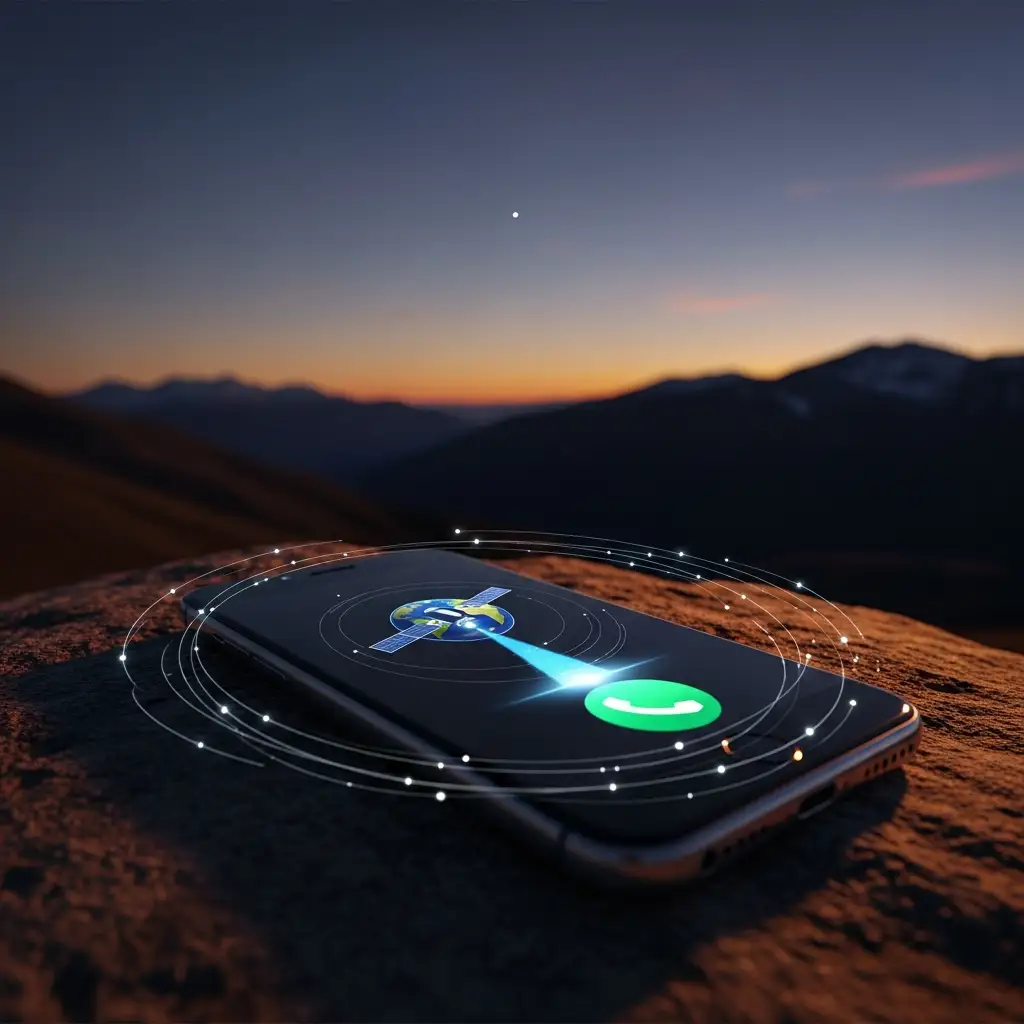
The orbit of the satellites also plays a crucial role in maintaining the communication link. With a constellation of satellites, transitions between satellites—as one moves out of view and another comes into view—must be seamless to ensure uninterrupted communication. This requires precise coordination and sophisticated software algorithms to achieve smooth handovers and avoid any drop in connectivity.
One of the more complex challenges in satellite-to-phone connectivity is overcoming latency or the delay experienced in data transmission. Since signals have to travel long distances to reach a satellite and then be routed through various systems, latency can become a noticeable issue, particularly for voice communications. Techniques like beamforming and advanced error correction algorithms are employed to mitigate these delays and ensure the quality of the communication link is maintained.
Power consumption in mobile devices is another consideration. Communication directly with satellites can require more energy than connecting to nearby cell towers, which means battery technology must evolve to support the demands of satellite communication. Advances in battery efficiency and energy management technologies are integral to sustaining prolonged connectivity periods without the need for frequent recharging.
Lastly, security is of paramount importance in any form of wireless communication, and satellite-to-phone systems are no exception. Strong encryption protocols are essential to protect the data transmitted over these systems from interception or tampering. Secure communication channels are typically implemented to ensure the integrity and confidentiality of the users' communications.
Satellite-to-phone connectivity is a burgeoning field that continues to draw interest from technological innovators and telecommunications companies alike. It presents the possibility of completely transforming how we connect with each other, providing seamless communication to every corner of the globe. While there are significant technical hurdles to overcome, the potential benefits can't be understated, from improving safety and emergency response to supporting economic development in regions that currently lack reliable connectivity solutions.
As more advancements are made and the technology becomes increasingly viable, satellite-to-phone connectivity is poised to play a pivotal role in the communication networks of the future, ensuring that everyone, regardless of their location on the planet, has the opportunity to stay connected.